How to Leverage Nested Virtualization for Secure Sandbox Testing
Addressing Memory Fatigue in modern business Networks
The arrival of 2026 has brought a brand-new set of difficulties for IT departments managing Windows Server 2026 environments. As organizations approach more hardware-intensive applications, the conventional approaches of resource allotment are proving insufficient. High-demand business tools, especially those including real-time data processing and maker learning integrations, need a level of precision that older server versions might not provide. In lots of regional information centers, the primary obstacle is no longer just raw capacity however how that capacity is dispersed under peak loads.
Memory management stays the most frequent point of failure when scaling these environments. Windows Server 2026 introduced a more aggressive memory compression algorithm designed to keep active information in RAM longer. When several instances of high-demand software run all at once, the system can go into a state of constant compression and decompression. This cycle takes in CPU cycles and increases latency for end-users. Organizations concentrating on Asia Virtual Solutions Growth typically find that setting difficult limits on memory buffers for specific services is the only way to avoid a single runaway process from destabilizing the whole node.
Fixed memory allocation, when thought about a sure thing for stability, has actually largely been changed by more fluid systems. The upgraded Dynamic Memory 3.0 in 2026 enables faster reclamation of unused pages, but it requires cautious setup of top priority levels. If the "Memory Weight" setting is misaligned, mission-critical databases might lose their cache throughout a sudden spike in background tasks. Technical teams in the local market are increasingly utilizing PowerShell scripts to keep an eye on the "Memory Offered MBytes" counter in real-time, triggering automated adjustments before the system begins swapping data to disk.
CPU Efficiency and Scheduling in the cloud sector
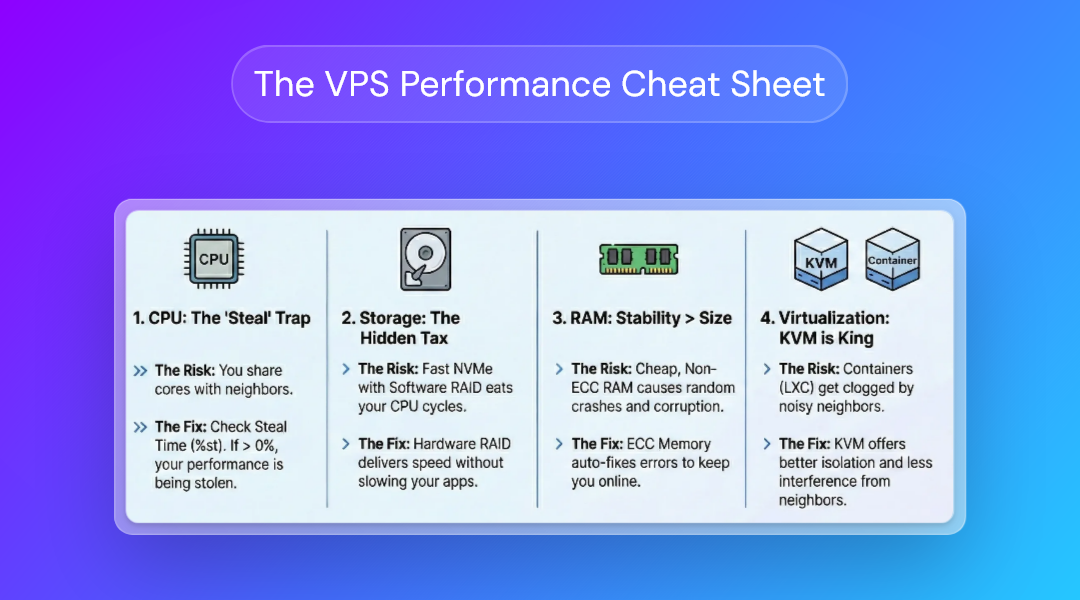
Processors in 2026 have more cores than ever, yet CPU contention stays a considerable traffic jam in multi-tenant cloud environments. Windows Server 2026 handles these resources through an updated scheduler that much better comprehends the difference between high-priority foreground jobs and background maintenance. Despite these improvements, "CPU steal" remains a reality in numerous virtualized infrastructure setups. This happens when the underlying hypervisor assigns physical processor time to other virtual devices, leaving the Windows environment awaiting execution cycles.
To fight this, administrators are moving away from over-provisioning. In previous years, it was typical to assign more virtual CPUs than physical cores available. In the high-stakes environment of 2026, this practice results in scheduling overhead that can deteriorate efficiency by approximately 15 percent. Switching to a 1:1 mapping for vital application servers has ended up being the requirement for businesses that can not manage millisecond hold-ups. This technique ensures that the Windows kernel has direct, foreseeable access to the hardware it requires for heavy calculations.
Nested virtualization has actually also seen a surge in usage this year. Numerous business run containers inside virtual devices for an extra layer of seclusion. While this supplies security benefits, it includes another layer of scheduling complexity. Fine-tuning the "Processor Scheduling" settings within the Advanced System Settings to prefer "Background services" rather than "Programs" is a typical strategy utilized to support these nested environments. This small modification assists the server handle the consistent context changing needed by containerized microservices.
Storage I/O Optimization for enterprise tools
Disk latency is the silent killer of application efficiency. Even with the prevalent adoption of NVMe-over-Fabrics in 2026, the way Windows Server deals with storage lines can create substantial backups. The Resilient File System (ReFS) has grown substantially this year, ending up being the default option for data-heavy volumes. Its capability to manage massive data integrity checks without taking the volume offline is vital, but the metadata overhead can still impact I/O operations per second (IOPS) if the underlying storage tier is not appropriately lined up.
Storage Quality of Service (QoS) is a feature that numerous tech-forward firms are now implementing to prevent "loud neighbor" syndrome. By defining minimum and maximum IOPS for each virtual disk, administrators can guarantee that a huge information backup or a database re-indexing task does not choke the storage pipeline for other applications. The concentrate on Asia Virtual Solutions Growth has actually assisted numerous firms recognize that throughput is often less crucial than constant latency. A constant 10ms reaction time is usually more effective to a connection that fluctuates between 1ms and 100ms.
Tiered storage stays an essential technique for economical scaling. By utilizing Windows Server 2026 Storage Spaces Direct, businesses can combine high-speed flash drives with bigger, slower mechanical disks or basic SSDs. The system immediately moves "hot" data to the fastest tier. This year has actually revealed that the "hot" data recognition reasoning can often be too sluggish for fast-moving company tools. By hand pinning specific files, such as active database logs or frequently accessed application binaries, to the efficiency tier is a necessary step for maintaining peak speeds during high-demand durations.
Network Throughput Limits in 2026 Deployments
Networking in the modern enterprise has shifted towards 400Gbps links, however the software-defined networking (SDN) stack in Windows can in some cases become a traffic jam itself. Every packet that travels through the virtual switch requires processing. As traffic grows, the CPU overhead for networking can become considerable. Get Side Scaling (RSS) and Switch Embedded Teaming (SET) are the main tools used to disperse this load throughout multiple CPU cores, preventing a single core from being overwhelmed by network disrupts.
The 2026 version of Windows Server includes boosted support for Data Center Bridging (DCB), which permits for more granular control over different types of traffic. For instance, storage traffic (iSCSI or SMB Direct) can be given a guaranteed percentage of the overall bandwidth, making sure that a big file transfer does not interrupt the heartbeat signals of a failover cluster. This level of control is required for keeping the high accessibility that modern-day cloud-based tools require.
Packet loss is another location where cloud environments struggle. In a traditional physical information center, cable quality and switch setup are the main issues. In the virtualized world of 2026, package loss often takes place at the virtual switch level when the buffer is full. Increasing the size of the "Jumbo Frames" where supported and expanding the virtual NIC buffers can minimize these drops. This is especially essential for video conferencing tools and real-time collaboration platforms that are sensitive to even small network jitter.
Methods for Horizontal Scaling with Windows Server
When vertical scaling-- adding more RAM or CPU to a single maker-- reaches its limit, horizontal scaling becomes the only path forward. This includes adding more server instances and dispersing the load amongst them. Windows Server 2026 has actually made this simpler with improved cluster sets and better integration with global load balancers. Companies in the region are significantly utilizing "Scale-Out File Servers" (SoFS) to offer a shared storage backend that can be accessed by numerous application nodes simultaneously.
Automated scaling is the hallmark of a fully grown cloud environment in 2026. Rather than by hand spinning up brand-new servers, administrators set activates based upon efficiency metrics. If the typical CPU usage across a web farm goes beyond 70 percent for more than five minutes, the system instantly deploys a new pre-configured image. This ensures that the environment broadens during the morning rush and agreements during the quiet night hours, enhancing both performance and expense. The shift between these states should be handled thoroughly to guarantee that active user sessions are not dropped when a node is decommissioned.
Application state management is the most challenging part of horizontal scaling. High-demand tools frequently store momentary data locally, which can cause issues if a user's next request is routed to a various server. Using external state stores, such as Redis or a centralized SQL database, is the standard solution in 2026. This allows the Windows application servers to remain "stateless," meaning any server in the farm can handle any request at any time. This versatility is what enables for the enormous scale seen in global digital platforms.
Managing the security overhead during these scaling events is also a consideration. Each brand-new instance must be covered and secured according to the business policy. Using "Just-In-Time" (JIT) administration and automated configuration tools guarantees that every node in the corporate environment is similar. This reduces the danger of configuration drift, which can lead to unforeseeable efficiency traffic jams and security vulnerabilities. In 2026, the objective is to treat servers as replaceable parts rather than special entities that need private attention.
Scaling a Windows Server 2026 environment needs a deep understanding of how software and hardware connect in a virtualized area. By dealing with memory pressure, CPU contention, storage latency, and network throughput, companies can develop a structure that supports the most requiring tools of the year. The focus is no longer on just having enough resources however on ensuring those resources are offered at the exact split second the application requires them. Through cautious tracking and the application of 2026's sophisticated management functions, the bottlenecks of the past are becoming workable difficulties in the present age of cloud computing.