The Leading Causes of Memory Fragmentation in Modern Virtual Servers
Attending To Memory Exhaustion in modern business Networks
The arrival of 2026 has brought a new set of challenges for IT departments managing Windows Server 2026 environments. As businesses approach more hardware-intensive applications, the traditional methods of resource allocation are showing inadequate. High-demand company tools, especially those including real-time information processing and artificial intelligence integrations, need a level of precision that older server versions could not provide. In numerous regional data centers, the main hurdle is no longer simply raw capacity but how that capacity is dispersed under peak loads.
Memory management stays the most frequent point of failure when scaling these environments. Windows Server 2026 presented a more aggressive memory compression algorithm created to keep active data in RAM longer. When numerous circumstances of high-demand software run all at once, the system can go into a state of continuous compression and decompression. This cycle takes in CPU cycles and increases latency for end-users. Organizations focusing on Asia Virtual Solutions Setup frequently find that setting hard limits on memory buffers for specific services is the only way to avoid a single runaway procedure from destabilizing the entire node.
Static memory allocation, once thought about a winner for stability, has mainly been changed by more fluid systems. The updated Dynamic Memory 3.0 in 2026 permits faster reclamation of unused pages, however it requires cautious setup of concern levels. If the "Memory Weight" setting is misaligned, mission-critical databases may lose their cache during an abrupt spike in background tasks. Technical groups in the local market are significantly using PowerShell scripts to keep an eye on the "Memory Offered MBytes" counter in real-time, setting off automated modifications before the system starts switching information to disk.
CPU Performance and Scheduling in the cloud sector
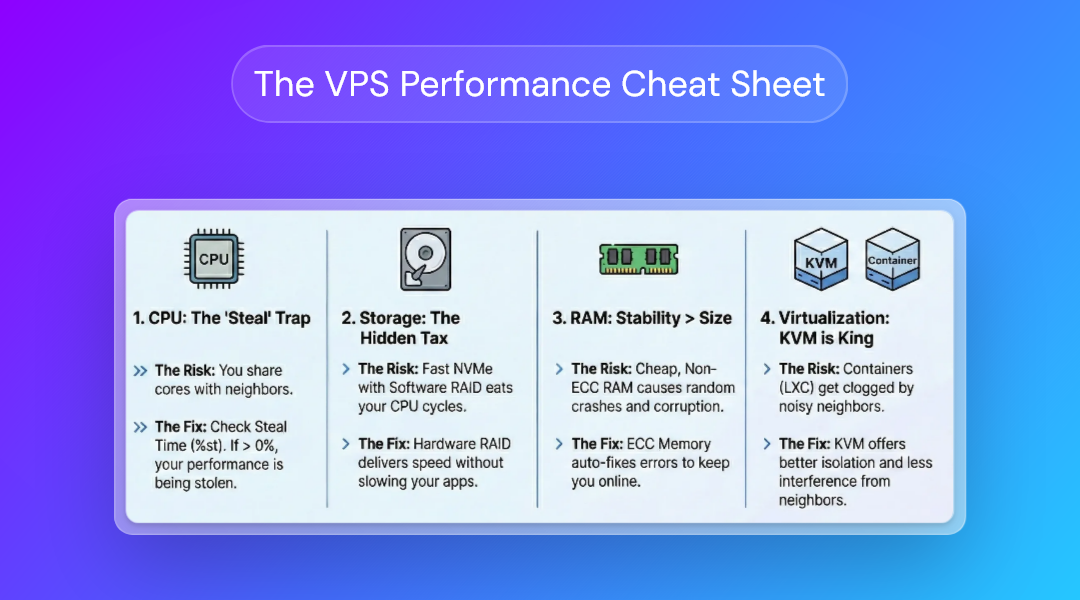
Processors in 2026 have more cores than ever, yet CPU contention stays a significant traffic jam in multi-tenant cloud environments. Windows Server 2026 handles these resources through an upgraded scheduler that much better comprehends the distinction in between high-priority foreground jobs and background maintenance. In spite of these enhancements, "CPU take" remains a reality in lots of virtualized infrastructure setups. This takes place when the underlying hypervisor allocates physical processor time to other virtual makers, leaving the Windows environment waiting on execution cycles.
To combat this, administrators are moving away from over-provisioning. In previous years, it prevailed to appoint more virtual CPUs than physical cores available. In the high-stakes environment of 2026, this practice leads to scheduling overhead that can deteriorate efficiency by as much as 15 percent. Changing to a 1:1 mapping for crucial application servers has ended up being the standard for organizations that can not afford millisecond hold-ups. This method ensures that the Windows kernel has direct, foreseeable access to the hardware it needs for heavy computations.
Embedded virtualization has likewise seen a rise in use this year. Numerous business run containers inside virtual devices for an additional layer of isolation. While this offers security benefits, it includes another layer of scheduling intricacy. Fine-tuning the "Processor Scheduling" settings within the Advanced System Settings to favor "Background services" rather than "Programs" is a typical tactic utilized to support these embedded environments. This little change helps the server handle the consistent context changing needed by containerized microservices.
Storage I/O Optimization for enterprise tools
Disk latency is the quiet killer of application efficiency. Even with the prevalent adoption of NVMe-over-Fabrics in 2026, the way Windows Server deals with storage queues can develop considerable backups. The Resilient File System (ReFS) has grown substantially this year, ending up being the default choice for data-heavy volumes. Its ability to manage massive data integrity checks without taking the volume offline is essential, however the metadata overhead can still affect I/O operations per second (IOPS) if the underlying storage tier is not appropriately lined up.
Storage Quality of Service (QoS) is a function that lots of tech-forward firms are now implementing to prevent "noisy next-door neighbor" syndrome. By specifying minimum and optimum IOPS for each virtual disk, administrators can make sure that an enormous information backup or a database re-indexing task does not choke the storage pipeline for other applications. The concentrate on Asia Virtual Solutions Setup has actually assisted numerous firms recognize that throughput is typically lesser than consistent latency. A steady 10ms response time is normally more suitable to a connection that fluctuates between 1ms and 100ms.
Tiered storage remains a crucial method for affordable scaling. By utilizing Windows Server 2026 Storage Spaces Direct, organizations can combine high-speed flash drives with bigger, slower mechanical disks or standard SSDs. The system immediately moves "hot" data to the fastest tier. This year has shown that the "hot" data recognition logic can in some cases be too slow for fast-moving business tools. By hand pinning specific files, such as active database logs or often accessed application binaries, to the performance tier is a required step for keeping peak speeds throughout high-demand periods.
Network Throughput Limits in 2026 Deployments
Networking in the modern enterprise has moved toward 400Gbps links, however the software-defined networking (SDN) stack in Windows can sometimes become a bottleneck itself. Every packet that passes through the virtual switch requires processing. As traffic grows, the CPU overhead for networking can become substantial. Receive Side Scaling (RSS) and Change Embedded Teaming (SET) are the main tools utilized to disperse this load across multiple CPU cores, avoiding a single core from being overwhelmed by network disrupts.
The 2026 variation of Windows Server consists of boosted assistance for Data Center Bridging (DCB), which enables more granular control over various kinds of traffic. For instance, storage traffic (iSCSI or SMB Direct) can be offered a guaranteed percentage of the total bandwidth, making sure that a large file transfer does not disrupt the heart beat signals of a failover cluster. This level of control is necessary for preserving the high schedule that contemporary cloud-based tools need.
Package loss is another area where cloud environments battle. In a conventional physical information center, cable television quality and switch setup are the primary issues. In the virtualized world of 2026, packet loss typically occurs at the virtual switch level when the buffer is complete. Increasing the size of the "Jumbo Frames" where supported and expanding the virtual NIC buffers can reduce these drops. This is especially crucial for video conferencing tools and real-time collaboration platforms that are delicate to even small network jitter.
Methods for Horizontal Scaling with Windows Server
When vertical scaling-- including more RAM or CPU to a single machine-- reaches its limit, horizontal scaling ends up being the only path forward. This involves adding more server instances and distributing the load among them. Windows Server 2026 has made this easier with improved cluster sets and better integration with global load balancers. Businesses in the region are increasingly using "Scale-Out File Servers" (SoFS) to supply a shared storage backend that can be accessed by several application nodes at the same time.
Automated scaling is the hallmark of a fully grown cloud environment in 2026. Rather than by hand spinning up new servers, administrators set triggers based upon efficiency metrics. If the average CPU use throughout a web farm exceeds 70 percent for more than five minutes, the system immediately releases a new pre-configured image. This ensures that the environment expands during the early morning rush and agreements throughout the peaceful night hours, optimizing both performance and cost. The shift between these states need to be managed thoroughly to ensure that active user sessions are not dropped when a node is decommissioned.
Application state management is the most tough part of horizontal scaling. High-demand tools typically keep temporary data in your area, which can trigger problems if a user's next request is routed to a various server. Using external state stores, such as Redis or a central SQL database, is the basic option in 2026. This allows the Windows application servers to remain "stateless," indicating any server in the farm can handle any demand at any time. This versatility is what permits the massive scale seen in global digital platforms.
Managing the security overhead throughout these scaling events is likewise a factor to consider. Each brand-new instance needs to be covered and secured according to the corporate policy. Using "Just-In-Time" (JIT) administration and automated configuration tools ensures that every node in the corporate environment equals. This minimizes the danger of setup drift, which can result in unforeseeable efficiency traffic jams and security vulnerabilities. In 2026, the goal is to treat servers as changeable elements instead of special entities that require specific attention.
Scaling a Windows Server 2026 environment needs a deep understanding of how hardware and software application interact in a virtualized area. By addressing memory pressure, CPU contention, storage latency, and network throughput, companies can build a structure that supports the most demanding tools of the year. The focus is no longer on just having enough resources however on making sure those resources are available at the specific split second the application needs them. Through cautious tracking and the application of 2026's sophisticated management features, the traffic jams of the past are becoming workable difficulties in the existing period of cloud computing.