Why Low Latency RDP Is Essential for International Remote Groups
Resolving Memory Fatigue in modern business Networks
The arrival of 2026 has brought a new set of obstacles for IT departments handling Windows Server 2026 environments. As businesses approach more hardware-intensive applications, the standard approaches of resource allocation are showing insufficient. High-demand organization tools, particularly those involving real-time information processing and artificial intelligence integrations, require a level of precision that older server variations could not provide. In lots of regional information centers, the primary hurdle is no longer simply raw capacity however how that capability is dispersed under peak loads.
Memory management remains the most regular point of failure when scaling these environments. Windows Server 2026 presented a more aggressive memory compression algorithm created to keep active data in RAM longer. Nevertheless, when numerous circumstances of high-demand software application run concurrently, the system can go into a state of continuous compression and decompression. This cycle takes in CPU cycles and increases latency for end-users. Organizations concentrating on Asia Virtual Solutions SER Power typically discover that setting hard limitations on memory buffers for specific services is the only method to avoid a single runaway process from destabilizing the whole node.
Static memory allocation, when thought about a winner for stability, has mainly been replaced by more fluid systems. The upgraded Dynamic Memory 3.0 in 2026 permits for faster reclamation of unused pages, but it needs mindful setup of priority levels. If the "Memory Weight" setting is misaligned, mission-critical databases might lose their cache during an abrupt spike in background jobs. Technical groups in the local market are progressively utilizing PowerShell scripts to monitor the "Memory Available MBytes" counter in real-time, setting off automated adjustments before the system begins swapping data to disk.
CPU Performance and Scheduling in the cloud sector
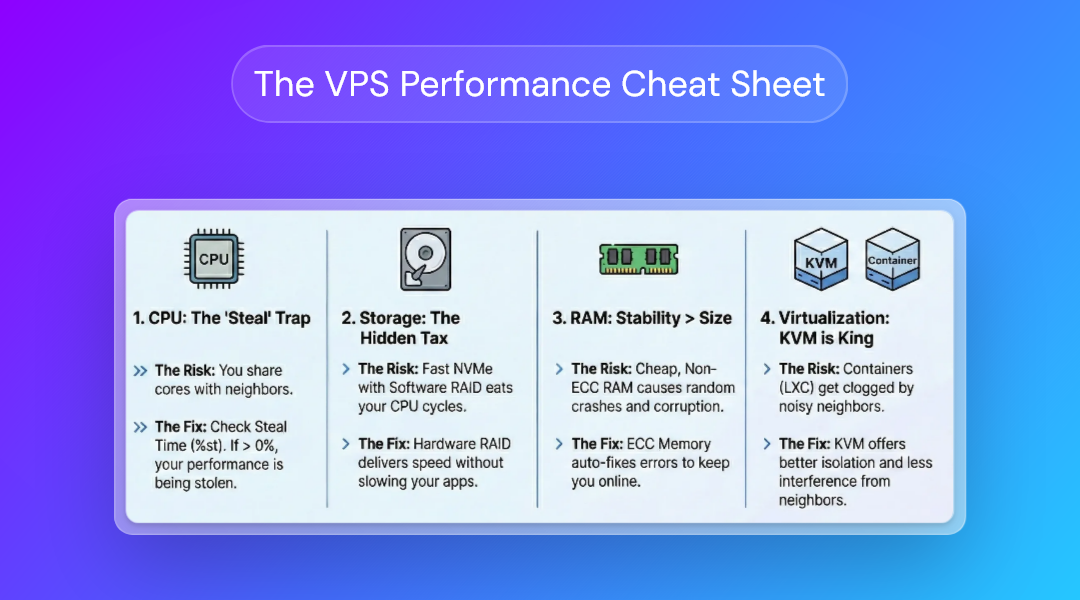
Processors in 2026 have more cores than ever, yet CPU contention stays a considerable traffic jam in multi-tenant cloud environments. Windows Server 2026 handles these resources through an updated scheduler that better comprehends the distinction in between high-priority foreground tasks and background upkeep. Despite these enhancements, "CPU steal" stays a reality in lots of virtualized infrastructure setups. This takes place when the underlying hypervisor allocates physical processor time to other virtual makers, leaving the Windows environment awaiting execution cycles.
To combat this, administrators are moving away from over-provisioning. In previous years, it prevailed to assign more virtual CPUs than physical cores readily available. In the high-stakes environment of 2026, this practice causes scheduling overhead that can degrade performance by up to 15 percent. Changing to a 1:1 mapping for important application servers has become the requirement for companies that can not pay for millisecond hold-ups. This method ensures that the Windows kernel has direct, predictable access to the hardware it needs for heavy calculations.
Embedded virtualization has likewise seen a rise in use this year. Numerous business run containers inside virtual devices for an additional layer of seclusion. While this offers security benefits, it adds another layer of scheduling intricacy. Tweaking the "Processor Scheduling" settings within the Advanced System Settings to prefer "Background services" instead of "Programs" is a common tactic used to support these nested environments. This small change assists the server manage the consistent context switching needed by containerized microservices.
Storage I/O Optimization for enterprise tools
Disk latency is the quiet killer of application efficiency. Even with the widespread adoption of NVMe-over-Fabrics in 2026, the method Windows Server deals with storage lines can create substantial backups. The Resilient File System (ReFS) has actually developed significantly this year, becoming the default option for data-heavy volumes. Its capability to manage large-scale information stability checks without taking the volume offline is important, but the metadata overhead can still impact I/O operations per second (IOPS) if the underlying storage tier is not correctly lined up.
Storage Quality of Service (QoS) is a function that many tech-forward companies are now carrying out to prevent "noisy neighbor" syndrome. By specifying minimum and optimum IOPS for each virtual disk, administrators can make sure that a huge information backup or a database re-indexing task does not choke the storage pipeline for other applications. The focus on Asia Virtual Solutions SER Power has assisted lots of firms determine that throughput is typically lesser than constant latency. A steady 10ms response time is normally more suitable to a connection that changes between 1ms and 100ms.
Tiered storage stays an important strategy for affordable scaling. By utilizing Windows Server 2026 Storage Spaces Direct, companies can combine high-speed flash drives with bigger, slower mechanical disks or basic SSDs. The system immediately moves "hot" data to the fastest tier. Nevertheless, this year has actually shown that the "hot" information recognition reasoning can sometimes be too sluggish for fast-moving service tools. By hand pinning specific files, such as active database logs or frequently accessed application binaries, to the performance tier is an essential action for keeping peak speeds during high-demand periods.
Network Throughput Limits in 2026 Deployments
Networking in the modern enterprise has shifted toward 400Gbps links, but the software-defined networking (SDN) stack in Windows can sometimes become a bottleneck itself. Every package that goes through the virtual switch needs processing. As traffic grows, the CPU overhead for networking can end up being considerable. Get Side Scaling (RSS) and Change Embedded Teaming (SET) are the primary tools utilized to distribute this load across numerous CPU cores, preventing a single core from being overwhelmed by network disrupts.
The 2026 variation of Windows Server includes improved support for Data Center Bridging (DCB), which enables more granular control over various types of traffic. Storage traffic (iSCSI or SMB Direct) can be given an ensured portion of the total bandwidth, making sure that a large file transfer does not disrupt the heartbeat signals of a failover cluster. This level of control is essential for keeping the high schedule that modern cloud-based tools need.
Packet loss is another area where cloud environments struggle. In a traditional physical data center, cable television quality and switch setup are the main issues. In the virtualized world of 2026, package loss frequently takes place at the virtual switch level when the buffer is full. Increasing the size of the "Jumbo Frames" where supported and broadening the virtual NIC buffers can reduce these drops. This is particularly essential for video conferencing tools and real-time cooperation platforms that are sensitive to even small network jitter.
Techniques for Horizontal Scaling with Windows Server
When vertical scaling-- adding more RAM or CPU to a single maker-- reaches its limit, horizontal scaling ends up being the only course forward. This includes adding more server circumstances and distributing the load amongst them. Windows Server 2026 has actually made this much easier with enhanced cluster sets and better integration with global load balancers. Companies in the region are progressively using "Scale-Out File Servers" (SoFS) to offer a shared storage backend that can be accessed by several application nodes concurrently.
Automated scaling is the trademark of a mature cloud environment in 2026. Rather than by hand spinning up brand-new servers, administrators set triggers based upon performance metrics. If the typical CPU usage across a web farm surpasses 70 percent for more than five minutes, the system automatically deploys a brand-new pre-configured image. This guarantees that the environment broadens during the morning rush and agreements during the quiet night hours, enhancing both efficiency and cost. The shift between these states should be handled carefully to make sure that active user sessions are not dropped when a node is decommissioned.
Application state management is the most hard part of horizontal scaling. High-demand tools typically keep momentary data locally, which can cause problems if a user's next request is routed to a various server. Utilizing external state shops, such as Redis or a central SQL database, is the standard option in 2026. This permits the Windows application servers to remain "stateless," suggesting any server in the farm can deal with any demand at any time. This versatility is what permits the huge scale seen in international digital platforms.
Handling the security overhead during these scaling events is likewise a consideration. Each brand-new circumstances must be covered and protected according to the corporate policy. Using "Just-In-Time" (JIT) administration and automated setup tools guarantees that every node in the corporate environment equals. This minimizes the risk of configuration drift, which can result in unforeseeable efficiency bottlenecks and security vulnerabilities. In 2026, the goal is to treat servers as exchangeable elements instead of unique entities that require specific attention.
Scaling a Windows Server 2026 environment requires a deep understanding of how software and hardware communicate in a virtualized area. By resolving memory pressure, CPU contention, storage latency, and network throughput, organizations can build a structure that supports the most requiring tools of the year. The focus is no longer on merely having enough resources but on guaranteeing those resources are readily available at the exact split second the application needs them. Through mindful monitoring and the application of 2026's advanced management features, the traffic jams of the past are ending up being workable hurdles in the existing age of cloud computing.